Wooden Pergolas & Covered Seating Areas
Shade in July and a dry table when the rain comes: that is what a pergola or a canopy really gives a garden. We build wooden pergolas as freestanding structures over seating areas and barbecue corners, and timber canopies attached to the house, over entrances, terraces and parking spots. Everything made to measure, because an off-the-shelf frame rarely fits your garden the way it should.
Read more
Ten-plus years and more than a thousand projects around Novi Sad have taught us one simple truth: you do not buy a pergola with your eyes, you buy it with the life that happens under it. So before any drawing we ask where the afternoon sun hits, where the wind comes from, and how many people sit down when the whole crowd shows up. The structure then designs itself.
- 10+ years of experience
- 1000+ completed projects
- Novi Sad and surroundings
- Free site visit
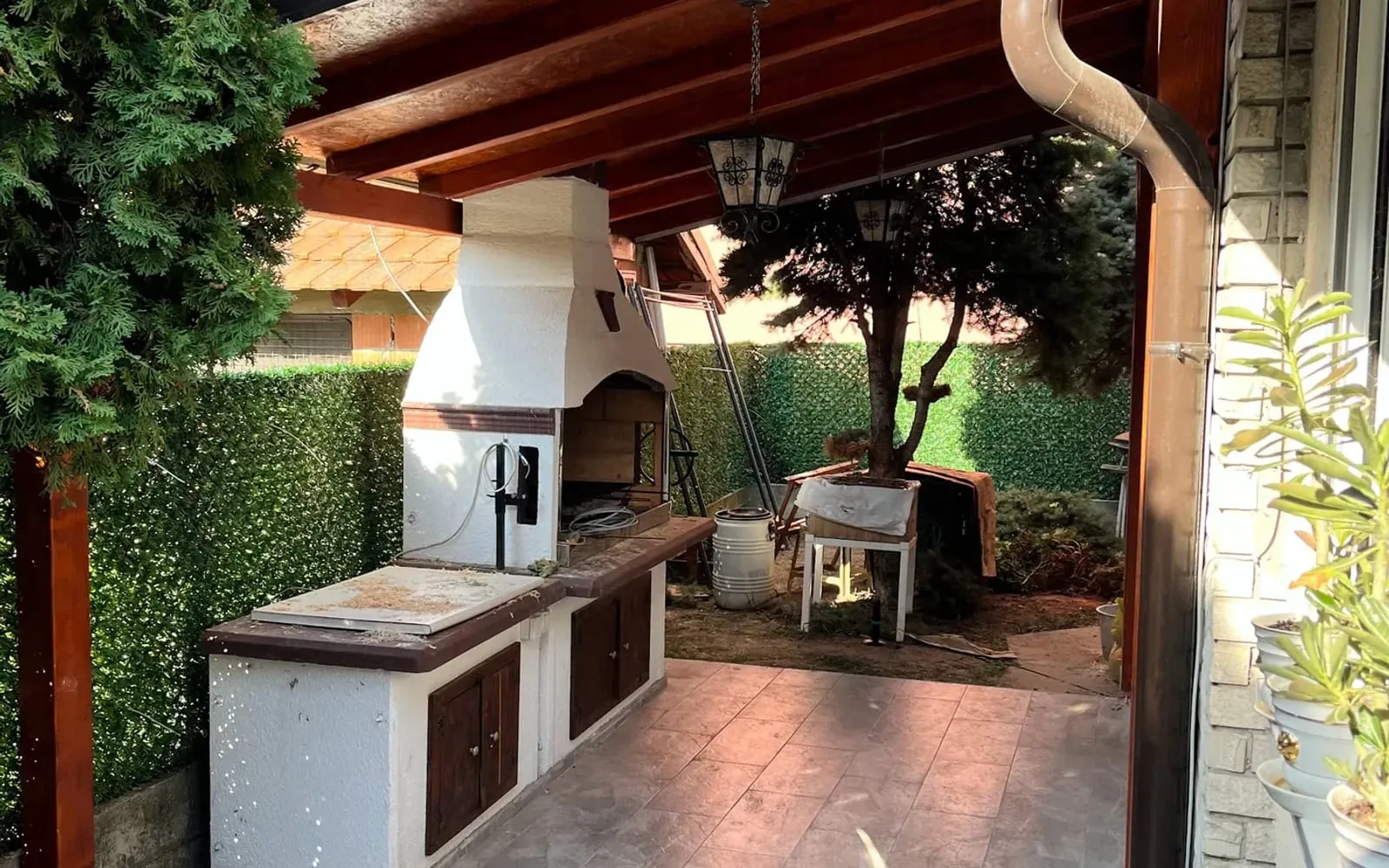
Our work
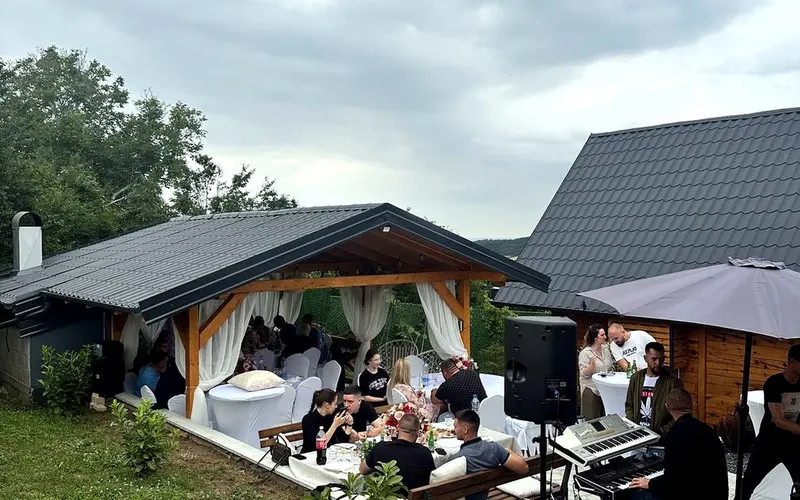
This is what it looks like when we finish
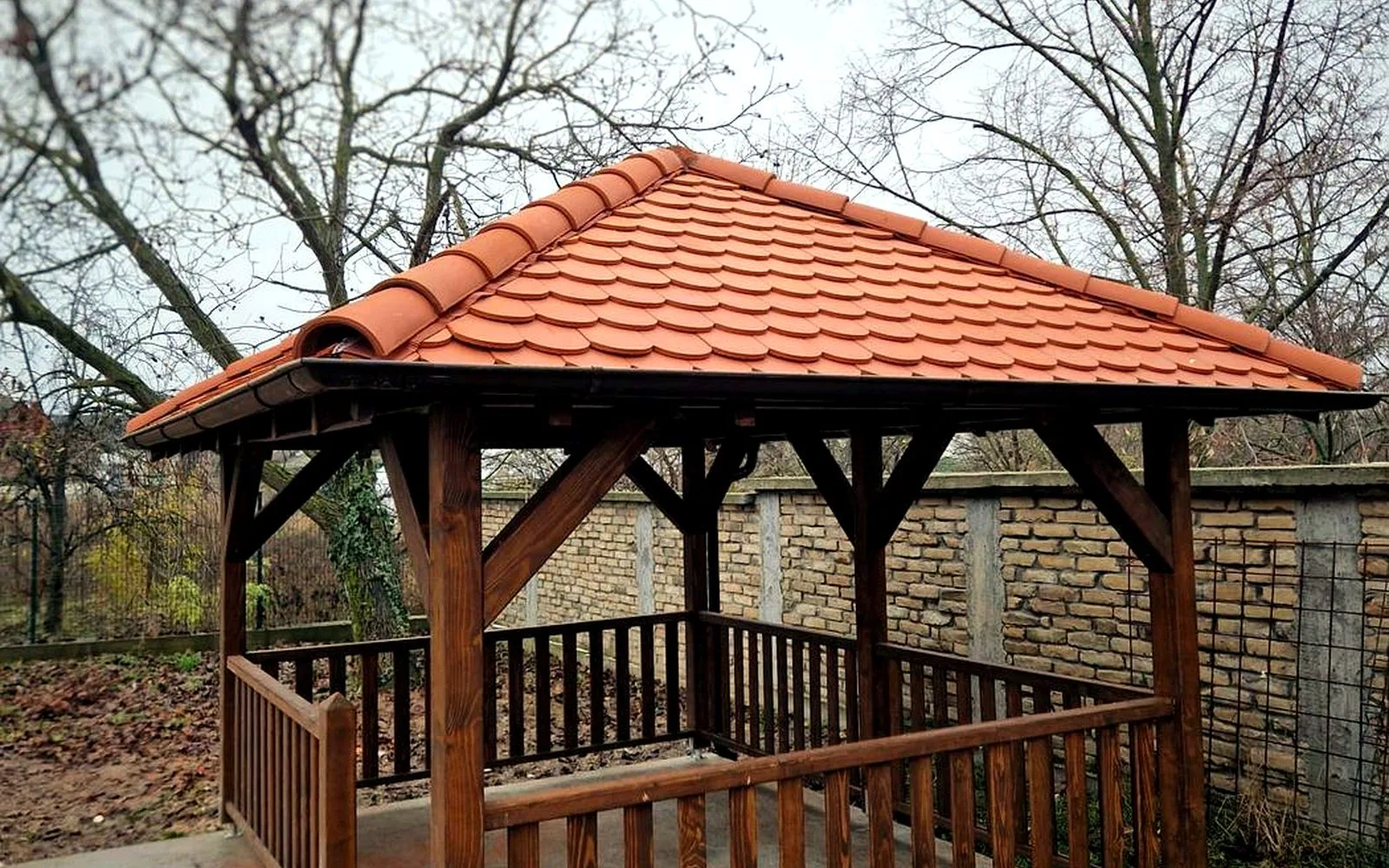
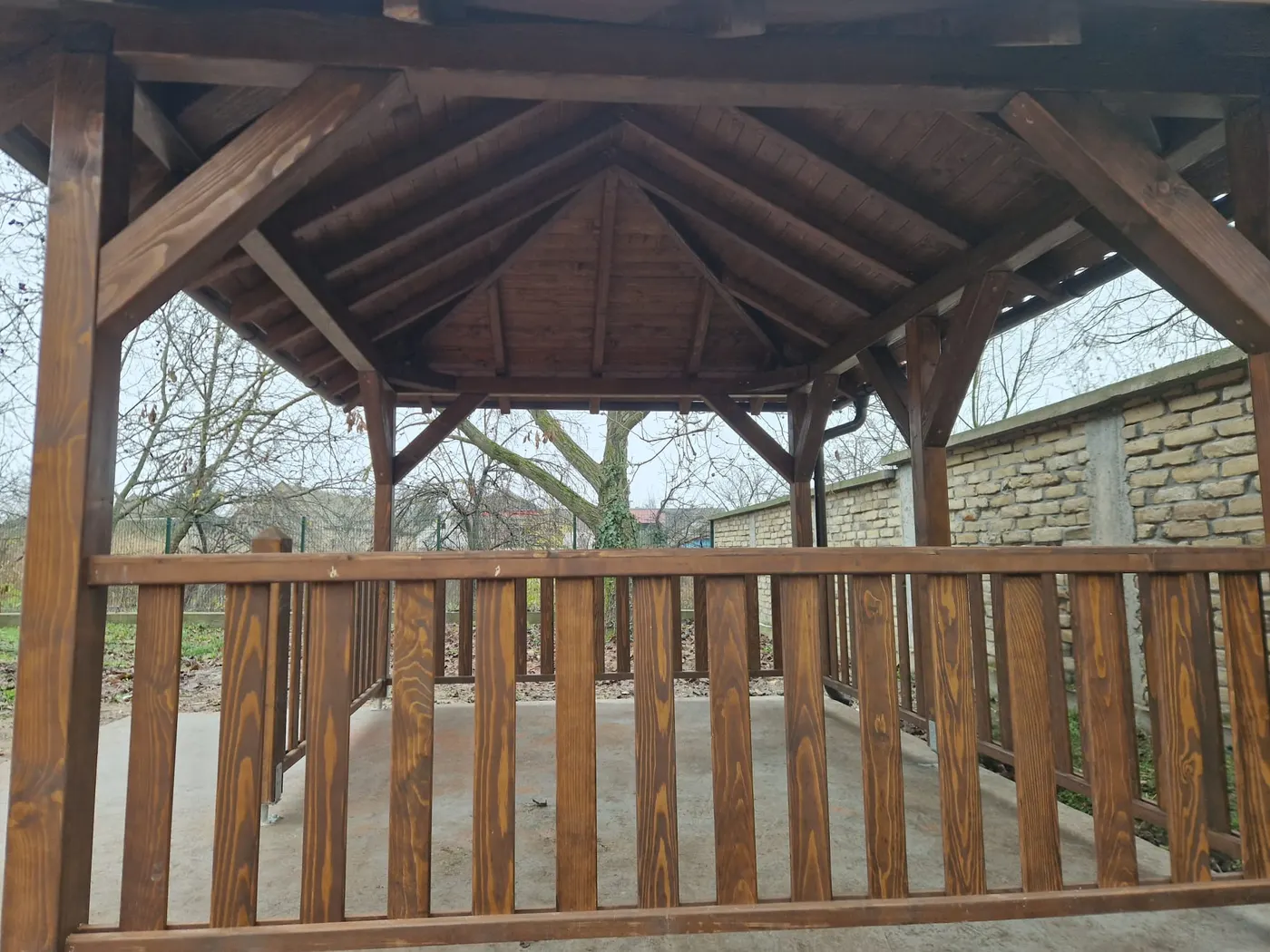
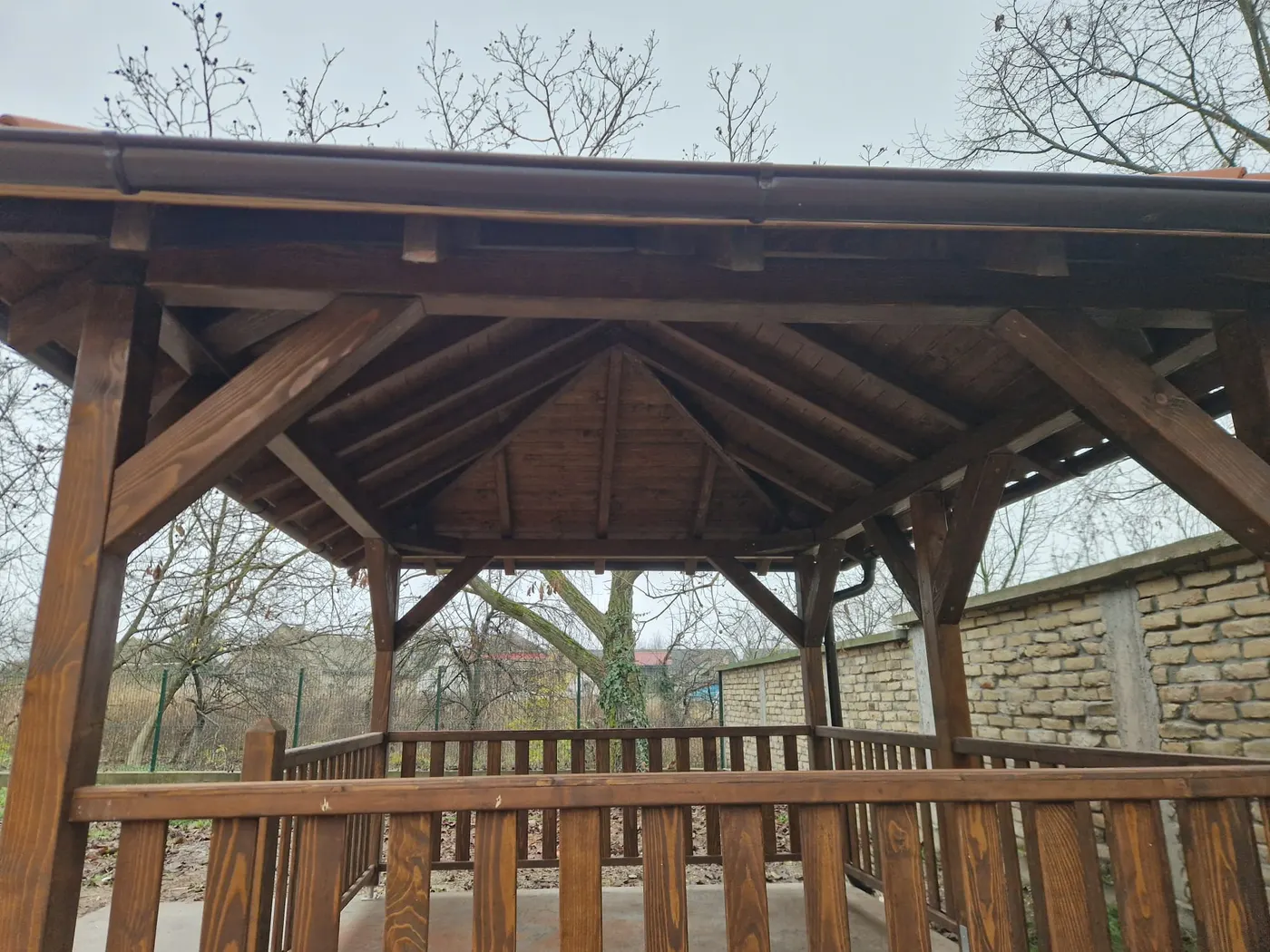
Materials and wood types
A pergola is an exposed structure, a skeleton with no cladding, so every beam has to be both load-bearer and ornament. We need timber that is straight, stable and strong enough to carry a roof, climbing plants, or snow on a canopy. In practice we work mostly with glued laminated spruce and Siberian larch, and choose the roofing to match the purpose.
Read more
The joints are a chapter of their own. We combine traditional carpentry connections with modern galvanised and stainless hardware, sized for the wind and snow Vojvodina can deliver. A pergola that creaks and shifts after two years has not been through this school.
Glued laminated spruce
Laminated spruce is the king of pergolas and canopies. The beams are perfectly straight, they do not twist or crack, and their load capacity is impressive for such a light material. The pale tone takes any stain, so the structure blends just as easily with a modern house as with a traditional one.
Siberian larch
When the brief calls for a more rustic look, or wood that can stay natural without an opaque coating, we reach for larch. Its own resin defends it against moisture, and the pronounced grain gives the structure a warm, hand-built character. It looks especially good next to larch terraces we have already built, tying the whole garden together.
Roofing and covers
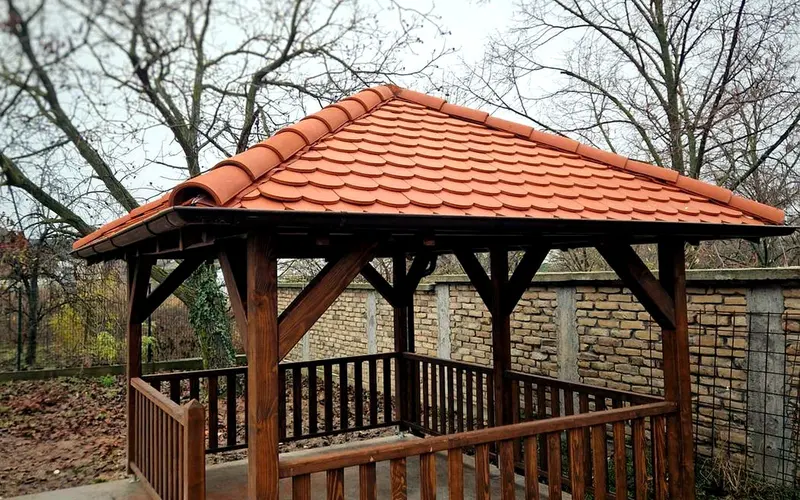
A pergola can stay open, for vines and dappled shade, or take a roof: clear polycarbonate that lets the light through, roof tiles matched to the house, or a wire-guided fabric canopy you stretch out in summer and pack away in winter. We show you each option on past projects, with an honest list of pros and cons.
Not sure what the right solution for your space is?
We visit, measure and bring samples - so you decide with full information. The visit and the quote are free and non-binding.
How we work
How the construction process works
It starts with a conversation and a survey in your garden, where we set the position, dimensions and height together, often with chalk on the concrete, because nothing shows the real footprint better. Then we draw a proposal, choose the timber and roofing, and send an itemised quote.
Read more
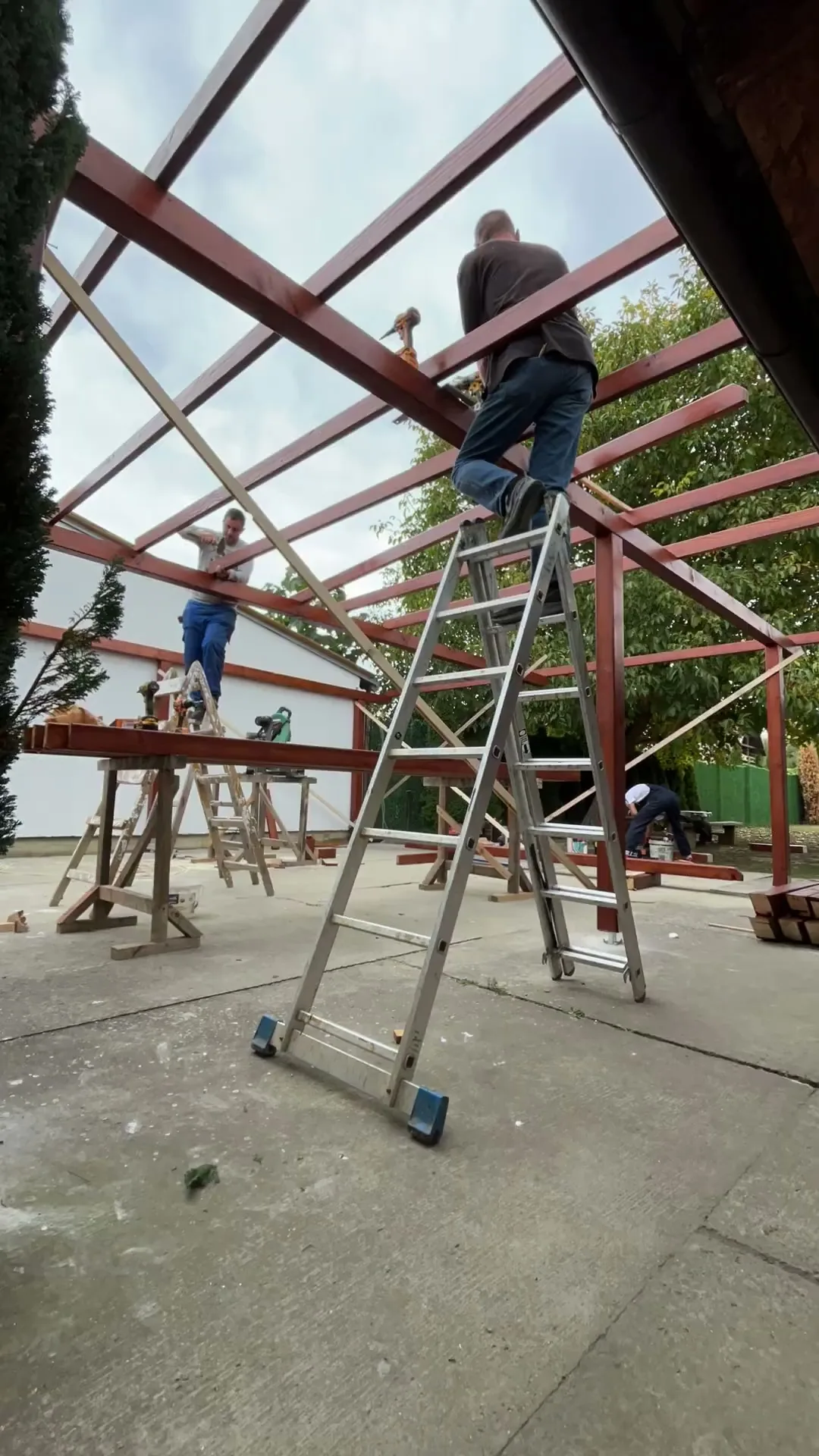
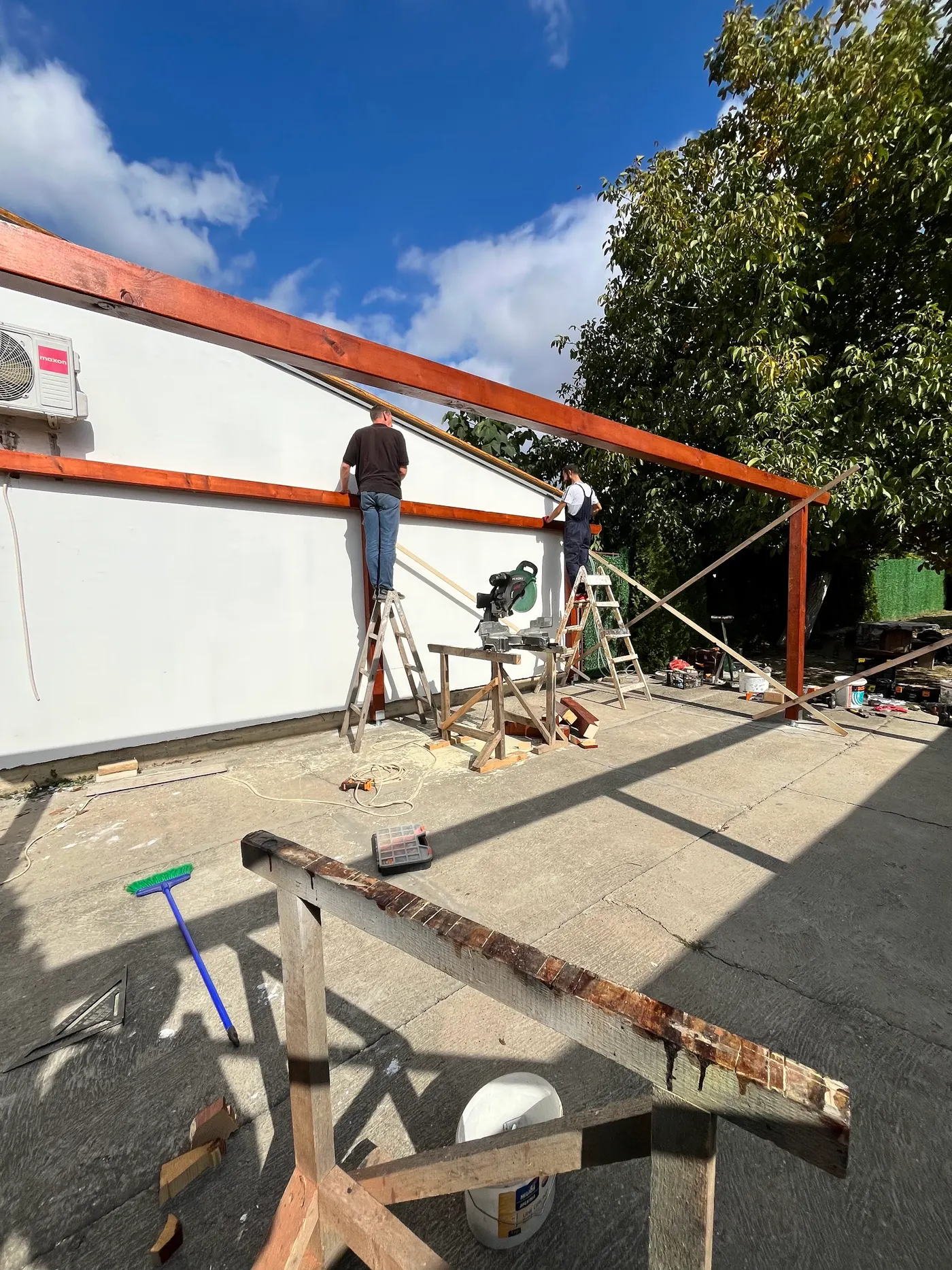
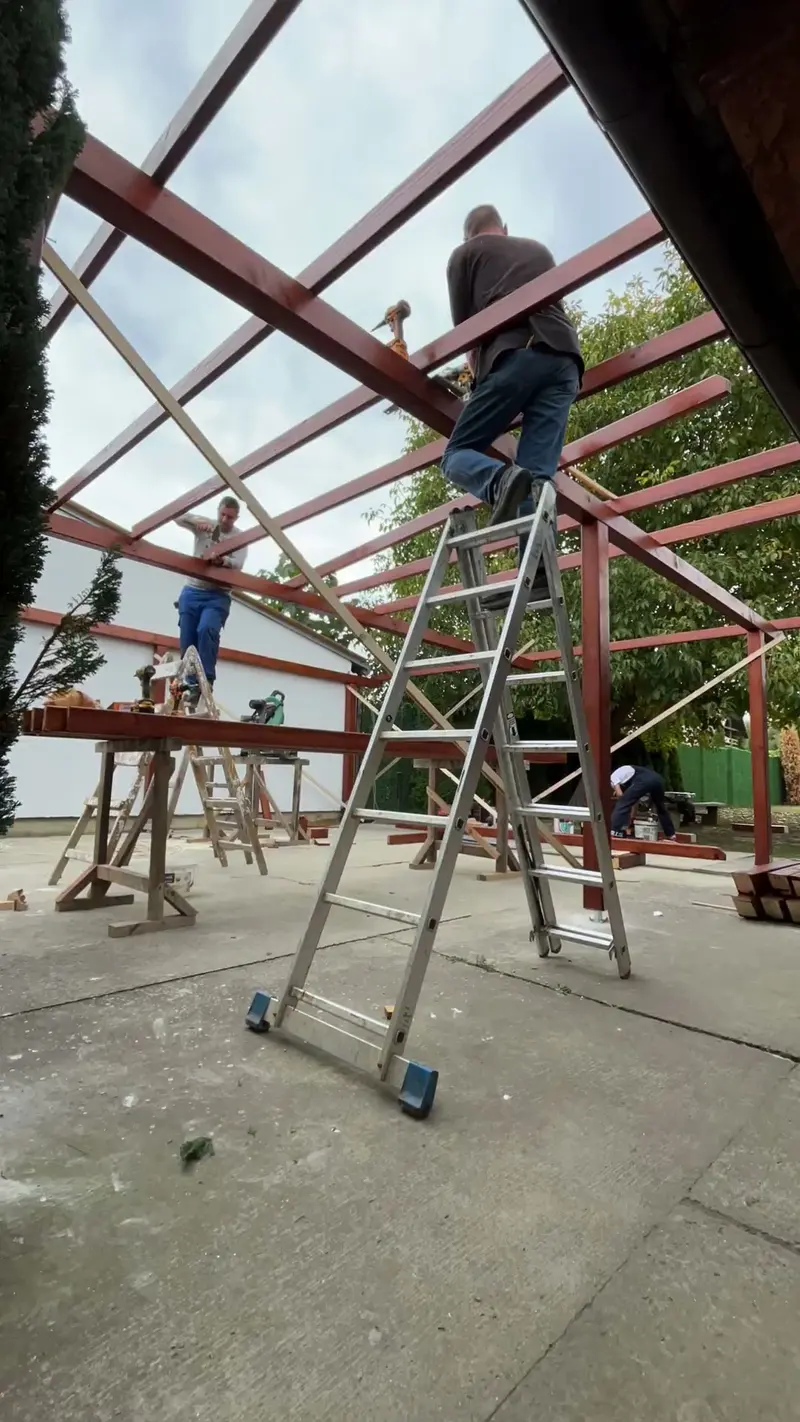
The beams are cut and dry-assembled in our workshop first, so they arrive on site labelled and ready. Installation begins with anchoring the posts into foundations or existing concrete, continues with raising the frame, and ends with the roofing and detail work. Most pergolas and canopies are finished in two to three working days, with no garden dug up for weeks.
- 1
Consultation and survey
We come to your home, measure and listen to what you want.
- 2
Itemised quote
A clear, line-by-line quote - you know exactly what you get.
- 3
Workshop and assembly
Elements are prepared in our workshop, assembled in days.
- 4
Protection and handover
Finish in your chosen tone plus care instructions.
Maintenance
A pergola needs less care than a terrace, since nobody walks on it, but it takes the full force of the sun. We renew the stain every two to three years, before the old coat starts cracking, because at that stage the new layer goes on in an afternoon, with no sanding required.
Read more
Once a year it pays to check the hardware, especially after strong winds, and to clear leaves out of any gutter or roofing channel. If a vine or wisteria grows over the pergola, thin it every few years so the structure can breathe. You get a short care guide for all of this, and an annual service visit from us if you want one.
What affects the price
Three things carry most of the price: the dimensions of the structure, the choice of timber, and the type of roofing. An open spruce pergola is the most accessible; a tiled canopy with built-in gutters is a serious piece of carpentry, and the price reflects that.
Read more
Foundations add their share, since a post belongs in concrete and not in grass, as do lighting, wind screens on the sides, and any connection to the roof of the house. Every item sits on its own line in the quote, and the site visit around Novi Sad costs nothing. Send us the rough dimensions and a couple of photos, and we take it from there.
A rough estimate in half a minute
Pick the type, area and wood - the calculator is right below, on this page.
Calculator
Rough Price Estimate
Pick what you are interested in and get a rough price range instantly. We confirm the exact quote after a free site visit.
Estimated price
…
for the whole project, materials and assembly included
Request an exact quoteThis is a rough estimate based on average prices. The final price depends on the site, base condition and structural details - we confirm it after a free on-site consultation.
Frequently Asked Questions
Do I need a permit for a pergola or canopy?
Smaller freestanding pergolas generally need no permit, while canopies attached to the house or larger covered areas may require registering the works. The rules depend on the municipality and the specific case, so during the site visit we tell you exactly what applies to you and help with the paperwork if needed.
Can a wooden canopy handle snow and wind?
Yes, when it is dimensioned properly. We calculate beam sections and post spacing from the span and the snow and wind loads expected in this region, with a margin on top. Laminated timber shines here, carrying more than solid wood of the same size. The structure stays solid even after a kosava wind.
Can we close in or roof the pergola later?
You can, and it is smart to say so up front. If there is even a small chance you will one day want a roof, side curtains or sliding glass panels, we dimension the structure for that from day one. The extra cost today is small; reinforcing a finished structure later is expensive and never looks right.
How long does it take to build a pergola?
From agreement to installation usually takes a few weeks, which is how long the timber preparation in our workshop needs. The installation itself takes two to three working days for most pergolas and canopies. You receive the exact schedule with your quote, and your garden stays a building site not one day longer than necessary.
Ready for your new terrace?
Send us a few photos of your space and rough measurements - we come back with a proposal and a free quote.